


Duct tee or Y-piece: choosing a ventilation branch
Tees and Y-pieces both create a branch, but route air through different shapes. Choose by layout, connection sizes and the resistance of both duct runs.
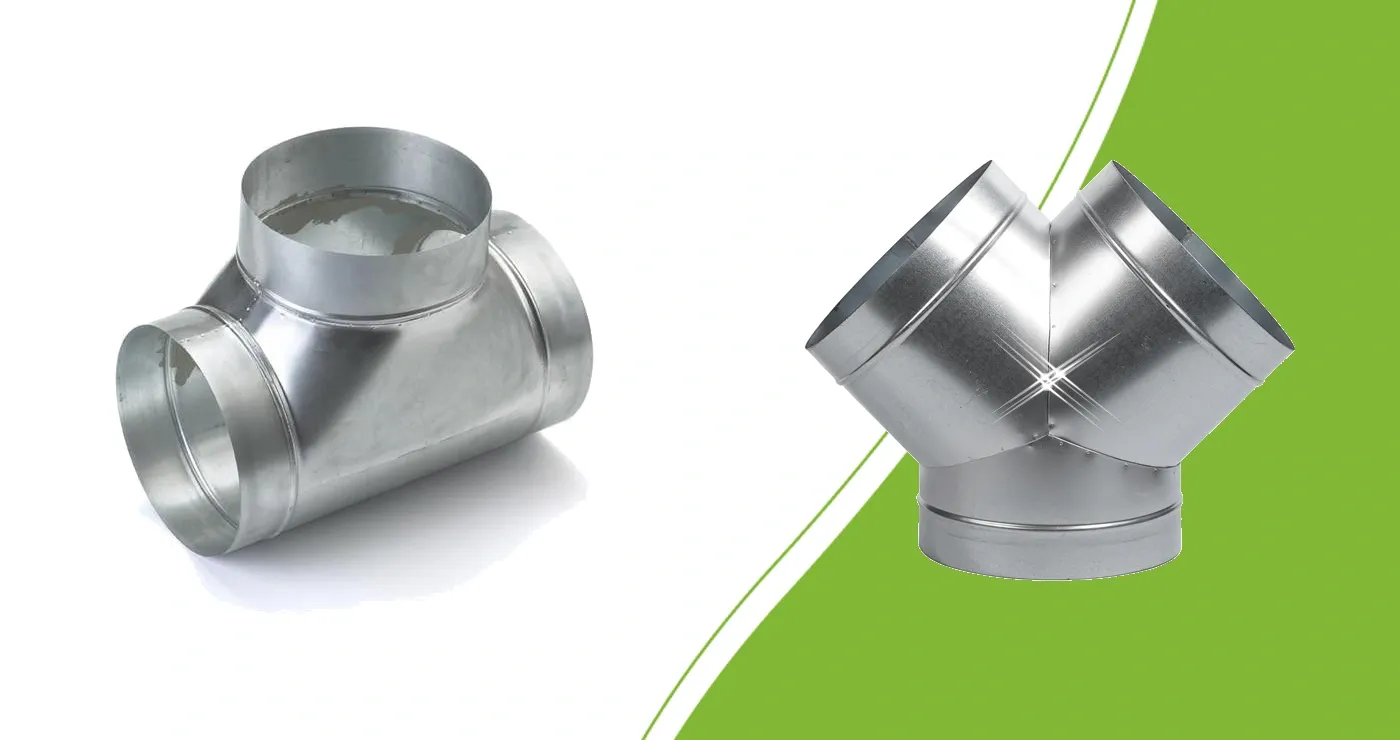
Draw the airflow direction first
Sketch where air enters and where it should leave. Distinguish between splitting one airflow and combining two flows. Mark the fan, filter and both branches. This lets you choose ventilation fittings for the complete arrangement.
Measure the space around the junction. A component can fit the duct diameter yet force a sharp kink immediately afterwards. Allow room for the fitting, connections and a smooth duct route.
How do the shapes differ?
A duct tee has a side branch at right angles to the main run. It can suit a straight route with a connection extending sideways. A Y-piece has an angled branch and can better suit two runs leaving at an angle.
Assess the actual shape and intended airflow direction. A gentler direction change can help the flow, but the name Y-piece does not prove a fixed capacity advantage. Angle, diameter, duct length and the rest of the installation all matter. To redirect one run without adding a branch, consider an elbow.
Check all three connections
A branch fitting has three connection points. Check diameter and fit at every point. Compare a 160 mm tee with a 160 mm Y-piece, for example, but do not assume every other version has three identical sizes.
A main run with a smaller branch needs an appropriate fitting or a deliberate diameter transition. Choose dimensions for the intended air path, not simply to reuse an available duct. Our diameter and reducer guide explains the connection checks.
Two branches do not mean a fifty-fifty split
Airflow divides according to resistance. Equal connection diameters therefore do not automatically deliver equal airflow. A short straight branch and a long branch with bends create different air paths. Filters and other connected components affect the result too.
A tee or Y-piece is not a regulating damper or non-return valve. If branches need independent adjustment or protection against backflow, the installation needs suitable provisions. Consider what happens when a fan or one connected appliance is switched off.
Check the assembled system
Support the junction so the ducts do not pull on its connections. Finish the joints with suitable clamps and sealing. Assess both branches with the complete system operating, rather than judging the air immediately beside the fan.
Measure branch airflow when distribution matters. Feeling the outlet by hand is not an accurate volume measurement. Before increasing fan speed to compensate for a poor route, check kinks, leakage, unnecessary restrictions and differences between the branches. Use our flexible duct installation checklist to inspect the connections.