


Coco coir or potting soil: which medium should you choose?
Coco coir, sometimes called coco soil, is made from coconut fibres and differs from potting soil. Compare composition and starting nutrients before choosing. Your pot size, watering routine and feeding programme need to fit the medium.
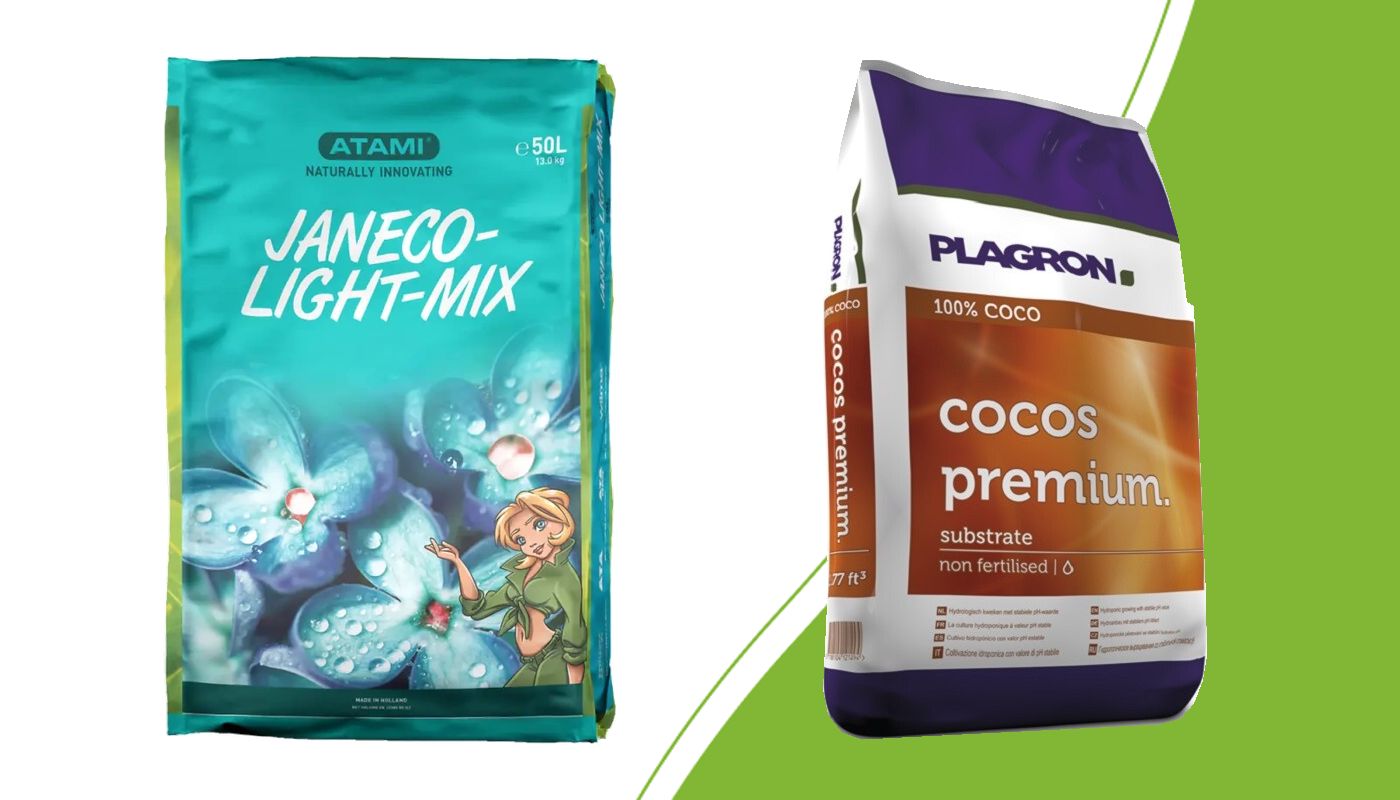
What does coco soil mean?
Coco soil is a common name for a coir-based growing medium. The word soil does not mean that it has the same composition or nutrient reserve as potting soil. Read the description: is it pure coir, a blend with perlite or another mixture? Also check whether the product is washed, buffered or pre-fertilised.
Start with your working method
Do not choose by brand alone. Write down how you plan to water, the pots you use and the feeding programme you can follow. A growing medium works well only when those choices fit together. Moving from soil to coco also means reviewing your feeding programme.
We recommend choosing the exact mix before nutrients and pot size. This avoids letting a bottle you already own determine the medium. Compare Grow soil for indoor growing and Coco coir for composition and starting requirements.
Potting soil: light or richer initial nutrients
Plagron Lightmix with perlite and Atami Janeco lightmix are lightly fertilised mixes. Atami Kilomix is more heavily fertilised. This changes the nutrient base already present in the pot; more nutrients are not automatically better for every plant stage.
Plan additional feeding for the chosen mix. Lightmix starts differently from Kilomix. Follow your product’s programme and assess your plants. Avoid adding a soil improver out of habit when the soil already has a rich nutrient base.
Coco: check buffering and added nutrients
Plagron Cocos Premium is washed and buffered. Use a suitable coco feeding programme from day one. Atami Cocos substraat is also washed and buffered, but lightly fertilised. These media therefore have different nutrient starting points.
Buffered describes a treatment of the coco; it does not mean the medium contains a complete feeding programme. Check the exact product. Cocos Premium and a version with added initial nutrients are different choices.
Adjust your watering
Growing medium, root ball, pot volume and conditions together determine how water is retained and used. Do not copy the number of waterings from a different setup. Observe moisture and drainage after a change.
Use pots with checked dimensions and drainage. Allow excess water to leave and assess water remaining in a saucer too. Choose Plant pots by capacity and outer dimensions; the pot volume guide helps estimate your growing medium needs.
Make your choice practical
Record your mix, pot capacity, feeding programme and watering approach. Review the setup when changing several factors. For young plants, also choose a starter medium that suits the next stage.
Explore Propagation supplies and read our plug and starter block guide. For feeding by medium, see Choosing plant nutrients for soil, coco or hydro. Return to Growing media & pots to compare the product groups.
Change your routine in steps
Before repotting, record the exact mix and the feeding schedule that goes with it. Check moisture and drainage in your own pots after the change. Do not copy a potting-soil watering routine straight to coco. Keep your method consistent, then adjust one element at a time so you can assess the effect.