


DimLux VPD: sensors and plant temperature explained
VPD brings together humidity, air temperature and leaf temperature. Learn which DimLux sensors are required and how to assess the measurements.
What does VPD tell you?
VPD stands for vapour pressure deficit. It describes a difference in water vapour pressure and helps assess temperature and humidity together. An RH reading alone does not tell the whole story. Distinguish a calculation for the air from one that accounts for leaf temperature.
Use VPD as part of crop assessment. The number does not replace checks of watering, roots, ventilation or plant condition.
Which sensors belong in the DimLux setup?
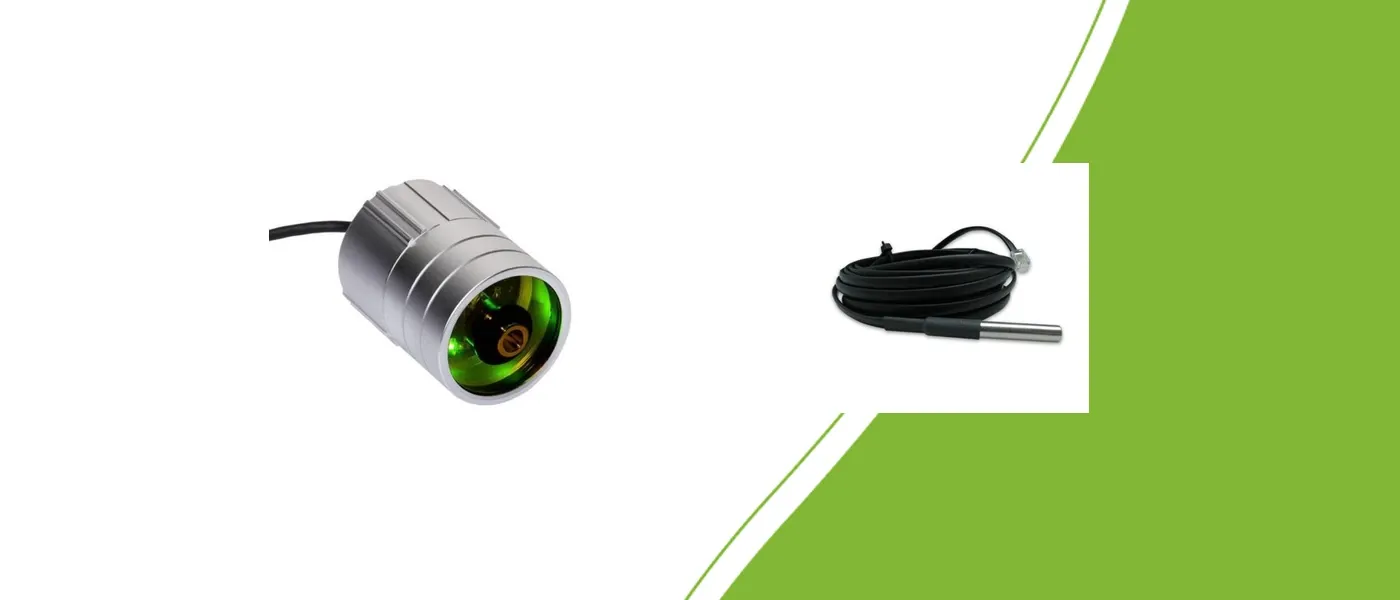
For the described Maxi Controller combination, DimLux uses an air temperature sensor, RH sensor and plant temperature camera. They provide different measurements. A CO₂ sensor does not replace an RH sensor, and an air sensor does not automatically measure the leaf.
Temperature sensors and analogue plant temperature cameras are available with 5 or 10 metre cables. Match cable length and sensor version to the measuring position. VPD also needs a suitable RH reading; a camera and temperature sensor alone do not form a complete sensor kit.
Why measure the leaf?
A plant temperature camera measures the surface it points towards. That can differ from air temperature. Pointing it at a pot, wall or empty space does not give the intended leaf reading.
Reassess this when moving from HPS to LED. An old air temperature setting does not prove that leaves experience the same conditions. Measure again at a representative position in the canopy.
Check placement before changing settings
Place air and RH sensors away from direct radiation as instructed.
Aim the camera at the intended crop and check its measurement area.
Check cables, input selection and displayed values.
Reassess measurements after changing the setup.
A sudden difference may come from placement. Check whether a sensor moved or the camera points past the canopy first. Repeated output changes do not correct an unsuitable measurement location.
Avoid one universal VPD target
A useful target depends on crop, development stage and growing conditions. Do not copy a single chart value without checking the leaf temperature and assumptions behind it. Air and leaf calculations can differ at the same RH.
Record air and leaf temperature, RH, lighting setting and measurement time together. This helps identify whether a setup change coincides with a crop change. Adjust one relevant setting at a time and assess the result.
Measurement and control are separate steps
A sensor provides a reading. The connected fixtures, software and extensions determine which correction the Maxi Controller can make. Check the active control and test its response before leaving the system to operate independently.
If temperature keeps rising, assess ventilation, water availability and room layout too. Dimming alone does not automatically solve a watering or air exchange problem.