


Replacing HPS bulbs: bases, lamp types and maintenance
Choose a replacement HPS bulb by more than wattage. Check the base, ballast compatibility and fixture condition, then plan maintenance using operating hours and light loss.
A working bulb may still need replacement
HPS maintenance involves more than checking whether a bulb starts. Operating hours, declining light output, contamination and the condition of the complete fixture all matter. No single replacement interval is reliable for every HPS lamp and setup.
Record the installation date, bulb code, operating hours and dimming settings. Compare light measurements at the same plane, hanging height and settings. A lower reading can also result from a dirty reflector, changed positioning or a different dimming level. Establish the cause before replacing only the bulb.
Choose the correct replacement
Use the full code on the existing bulb and the exact ballast model. Check rated wattage, lamp type, base and electrical designations. The whole combination must be compatible; similar glass dimensions are insufficient.
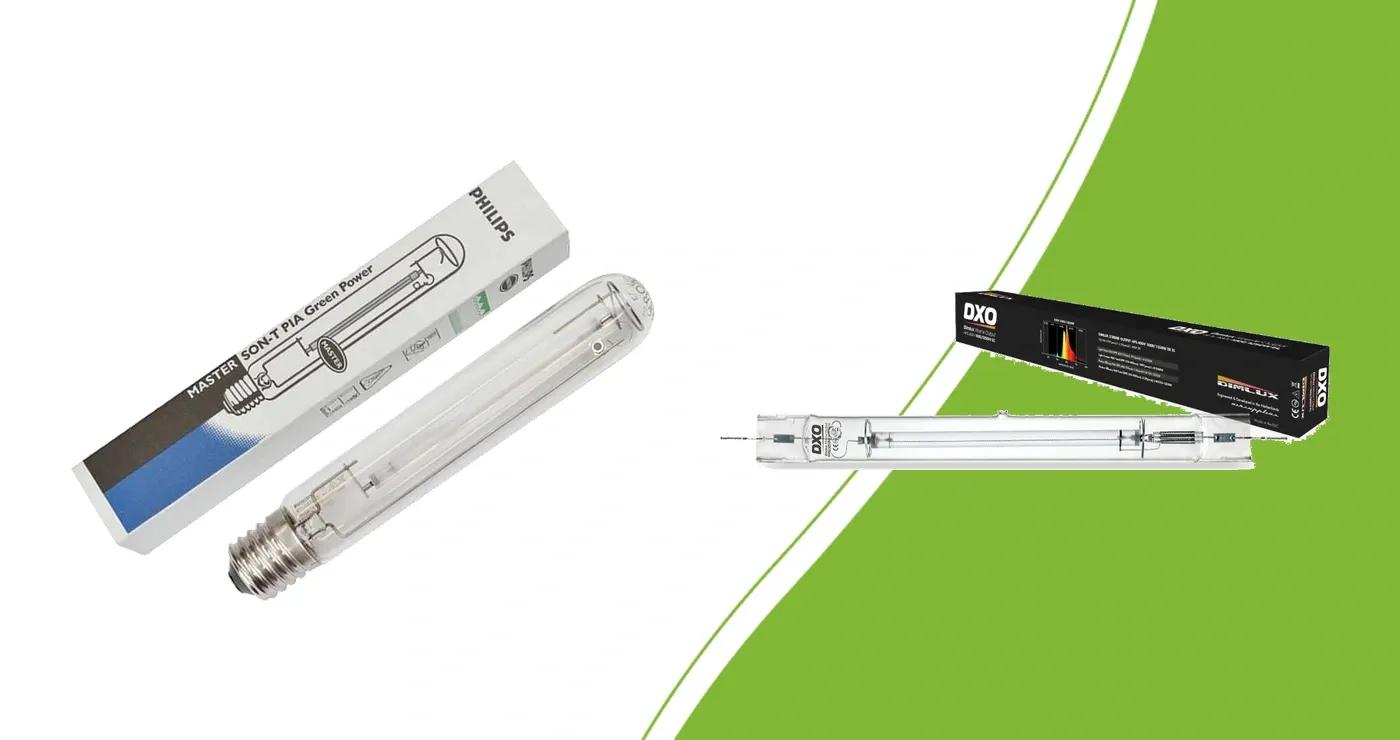
E40: a screw base at one end. The base alone does not determine electrical compatibility.
Double-ended or DE: contacts at both ends, requiring a matching holder. A DE bulb is not a direct replacement for an E40 bulb.
EL and voltage designations: check whether the bulb suits the particular ballast version.
An HPS bulb is not a universal replacement for MH or CMH. If the combination is uncertain, start with our HPS ballast guide. Similar wattage or a matching plug is not enough.
Work with an isolated, cooled setup
Switch the lighting off, disconnect it from the mains and let the bulb and reflector cool fully before touching them. Allow the cooling time required for the particular fixture. Avoid touching lamp glass with bare fingers; use clean protection and avoid pressure on delicate parts.
Locking mechanisms and lamp orientation vary between holders. Use the installation procedure for the exact fixture. Never force a bulb into a holder. Check that contacts and closures are undamaged. Take lighting with a damaged holder, cable or ballast out of use and have it assessed.
Inspect the reflector at the same time
A new bulb cannot restore a deformed or damaged reflector. Check for dust, deposits, scratches and distortion. Reflective coatings can be sensitive to handling and cleaning products, so do not polish them indiscriminately with a cloth, abrasive or solvent.
Establish whether your reflector can be cleaned and which method is suitable. Replace a damaged reflector with a compatible component. A reflector intended for another fixture may have different mounts and light distribution, even if its outer dimensions look similar.
Record a new baseline
After replacement, record the bulb code, date and selected power setting. Check the setup at its next start and compare distribution once the lamp has reached its operating condition. Record any change to height or settings as well.
If the lamp continues to cut out or restart repeatedly, avoid replacing parts at random. Have the combination and supply assessed. If you also intend to change power, read choosing 400W, 600W or 1000W HPS and check the whole HPS lighting setup again.