


Choosing an HPS ballast: match the bulb and power supply
A suitable ballast must match more than wattage. Check lamp technology, electrical version, base and dimming range before combining an HPS bulb and ballast.
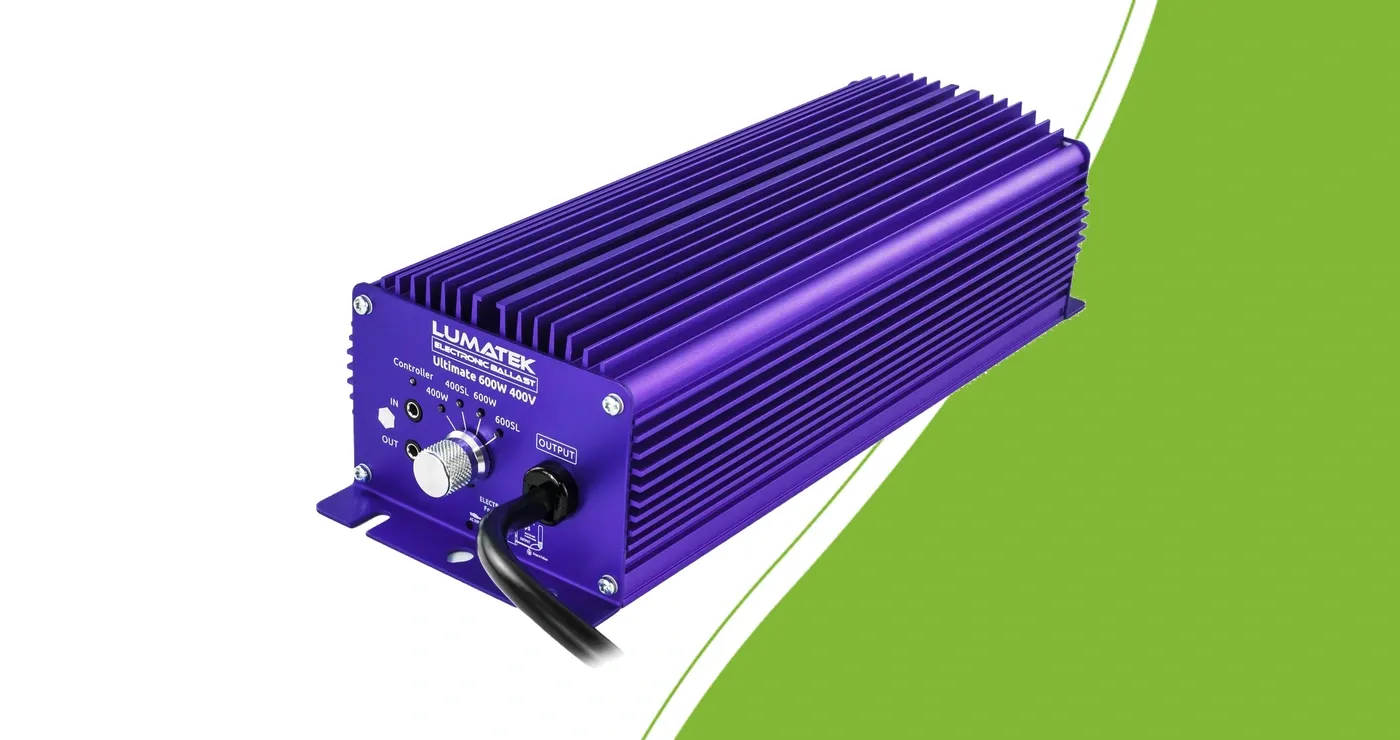
What does an HPS ballast do?
An HPS bulb needs a suitable ballast for starting and controlling current during operation. A loose bulb must not connect directly to the mains. The ballast may be a separate component or integrated into a complete fixture.
For replacement, begin with the bulb and fixture you intend to keep. Record the brand, model, rated bulb power and full type designation before comparing ballasts. Matching power classes alone does not establish compatibility.
Check five properties
Lamp technology: choose a ballast supporting the exact HPS lamp type. MH and CMH are different technologies; matching connections do not make them interchangeable.
Rated power: bulb and ballast must operate together at the intended power. Check the permitted adjustment settings too.
Electrical lamp version: designations such as 230V, 400V, EL and high frequency are part of the compatibility check. A conventional HPS bulb is not automatically interchangeable with a professional EL bulb.
Base and fixture: E40 and double-ended lamps need different holders. Check the fixture’s permitted bulb and wiring requirements.
Input and controls: the ballast’s mains requirements and controller connection must suit the installation.
Mains voltage and lamp designation are separate
The voltage shown on a bulb does not automatically describe the mains connection needed. Some ballasts operate a professional 400V bulb from a 230V supply; other versions have different requirements. Record the ballast input and supported bulb type separately.
A plug adapter cannot change electrical compatibility. Resolve uncertainty about the supply before switching on. For a new installation, a complete HPS fixture can simplify choosing matched components.
Electronic, dimmable and boost settings
An electronic ballast uses electronic components to control the lamp. That description alone does not make it suitable for every HPS bulb. Check the supported lamp family and version. For dimmable models, establish which settings are permitted for the exact bulb.
Boost settings supply more output power than the nominal setting. Use them only with a combination designed for that operation. Several wattages on a control do not authorise arbitrary bulb changes. Do not control an HPS ballast with an ordinary household light dimmer.
Include heat and switching equipment
Protect the ballast from moisture, dirt and obstructed cooling. Match placement, clearance and switching equipment to the exact model. Assess the complete lighting load, including starting, when selecting a suitable timer or relay.
Use total input power for consumption calculations. Our HPS power and energy guide explains the calculation. Have damaged connections or persistent faults assessed, and do not open the ballast for a home repair.
Replace by specification
Use the exact ballast model and complete existing bulb code as your starting point. Check base, power and electrical version for any replacement. Our HPS replacement bulb guide provides a systematic check for the next step.