


Plan an irrigation setup: from tank to dripper
A suitable irrigation setup starts with a route on paper. Record water demand, the source and delivery points before choosing your tank, pump and pipework.
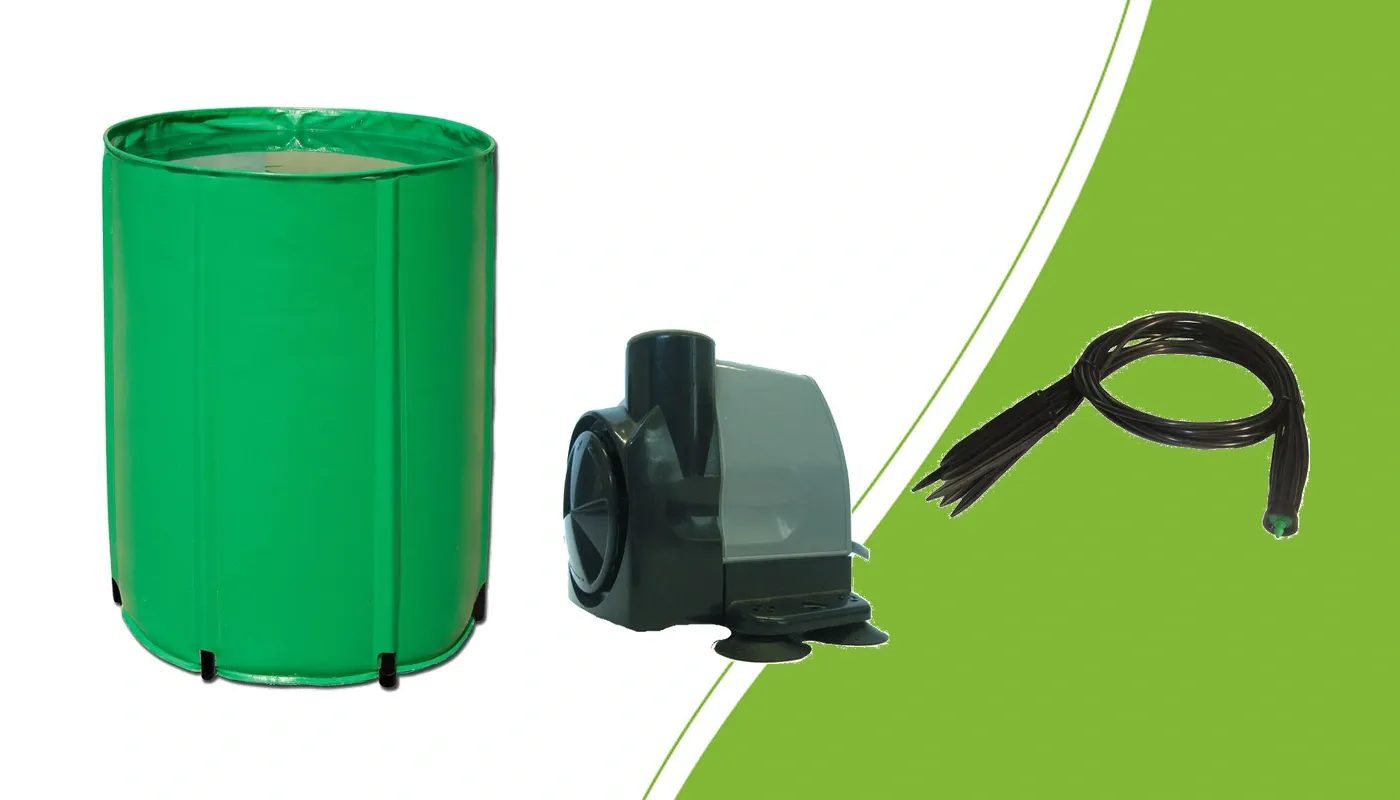
Record water demand first
Start with the pots and plants you want to water. Note the substrate, pot sizes, number of outlets and current watering method. Measure use over several representative watering sessions. Tent size alone does not tell you how much water you need: plant size, substrate and conditions matter.
Draw the source and outlets. Add pipe lengths, height changes, bends and branches. Make the route accessible for inspecting fittings and cleaning the tank. Decide whether you will work manually or may add time control later.
Choose usable water storage
Choose tank capacity by the reserve you can actually use and the space available. Account for the outlet position, minimum water level and refilling. The whole nominal volume may not be usable. Include room for opening the lid, mixing and cleaning.
Our range includes rigid and collapsible water tanks. A collapsible Aquaking tank stores compactly when empty, but needs its full space when filled. Explore Water tanks and the existing Water tank sizing: calculate your usable water supply guide to assess storage volume.
Define the pump’s job
Will you circulate nutrient solution, supply outlets or empty a tank? These are different tasks. Select the pump by the flow needed at the actual lift and resistance. A maximum litres-per-hour figure is not sufficient on its own.
For drippers, also check required operating pressure. Record any missing information before ordering parts. Explore Irrigation pumps and assess the exact model; a suitable hose barb does not prove that the pump can deliver the pressure you need.
Specify each connection
Choose PE pipes & fittings, PVC pipes & fittings or Garden hoses & fittings by your planned route and assembly method. Record pipe or hose sizes, thread sizes and connection types for each join. Internal diameter, external diameter and nominal thread size describe different measurements. Use suitable adapters.
Then choose Sprinklers & drippers by flow, pressure and distribution. Include filtration required by the outlets. Test the complete route with water, check for leaks and measure several outlets. Only set a schedule after you know the actual distribution.