


PVC solvent joints or thread sealing: which method fits?
Solvent sockets and threaded fittings need different preparation. Learn to recognise the connection, choose suitable materials and check when the pipework can be loaded.
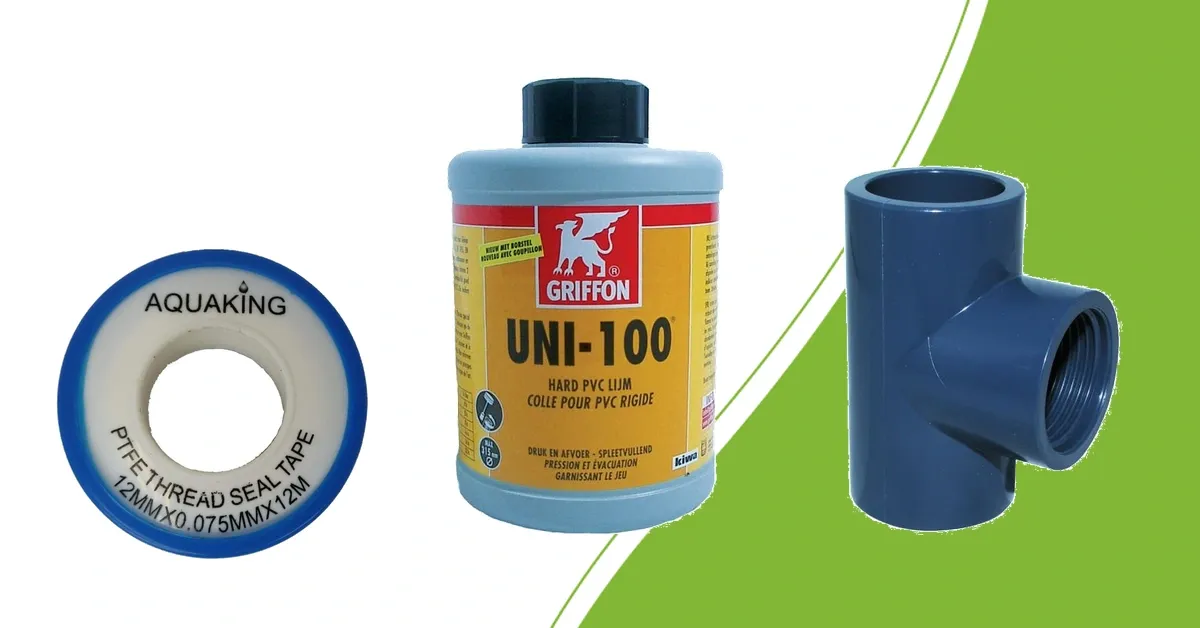
Identify the connection first
A smooth solvent socket joins matching rigid PVC pipe with cement. A threaded fitting screws together and may seal at the thread or with a separate ring. Some parts combine both, such as a 32 mm elbow with a 1 inch female thread. Assess each side separately.
First check the pipe and thread sizes. Cement and tape do not make an incorrectly selected connection fit.
Prepare a PVC solvent joint
Drain the line and release its pressure. Cut the pipe square, deburr it and prepare the end appropriately. Check the fit and mark the insertion depth and orientation before applying cement. An elbow or branch needs to be aligned correctly as soon as the parts are assembled.
Clean the contact surfaces with a suitable cleaner and allow them to dry. Choose rigid-PVC cement that suits the material, fit and application. The 250 ml PVC cement is an assembly material, not a way to compensate for a damaged socket or incorrect pipe size.
Working time and curing time are different
Apply the cement and assemble the parts within its working time. Use the specified coating thickness and technique. Remove excess cement and leave the joint undisturbed during its initial bond.
Allow the required cure before mechanical loading or water pressure. Temperature, fit and load influence the waiting time. A joint that already feels firm may still be unready for service. Ventilate the workspace, avoid ignition sources and follow the handling and protection instructions on the packaging.
When should you use PTFE tape?
PTFE tape may suit a connection that seals at the thread. Check that the tape is appropriate for the material and application. If a joint uses a gasket or O-ring, that seal provides the closure; additional tape on the thread is not automatically an improvement.
Do not use PVC cement on threads to hide a leak. Avoid forcing plastic threads or adding more and more tape to a poor fit. If a connection leaks, recheck the thread, seal and any damage.
Check before putting the system into service
Keep joints accessible for the first check. Let the cement cure fully, then bring the system into service in a controlled way according to its requirements. Check every joint for leaks. Release pressure again before making adjustments.
A leaking solvent joint needs assessment of the joint itself. Adding cement around its outside is not a reliable repair. Plan for maintenance and an accessible isolation valve. Browse PVC fittings for irrigation to select the pipework components together.