


32 mm PVC and 1 inch threads: checking connection sizes
A 32 mm pipe connection and a 1 inch thread describe different sizes. Use this check to avoid choosing a fitting that looks suitable but has the wrong connection.
Start with the existing connection
Decide what you need to join: two pipes, a branch or a line to a valve or another component. Record the material and full size markings on both sides. When replacing a fitting, a photo of the old part and the markings on the pipe is more useful than the outer dimensions of the fitting alone.
Our PVC fittings range centres on 32 mm components. This helps narrow the choice, but the same nominal size does not by itself prove that two parts belong together.
What do you measure on 32 mm PVC pipe?
Metric PVC solvent connections are selected around the outside diameter of the matching pipe. Measure a straight, undamaged section with callipers. Do not measure the outside of the socket: that includes the fitting wall. The internal bore is another dimension again.
Check the pipe markings and fitting design alongside your measurement. A distorted end or old cement can affect the reading. Use the measurement to identify the correct part, rather than trying to compensate for an unsuitable fit with extra cement.
Why a 1 inch thread is not a 25.4 mm pipe connection
One inch as a unit of length equals 25.4 mm, but a pipe thread labelled 1 inch uses a nominal designation. You cannot directly compare that name with the outside diameter of metric pipe. Thread profile, pitch and form also matter.
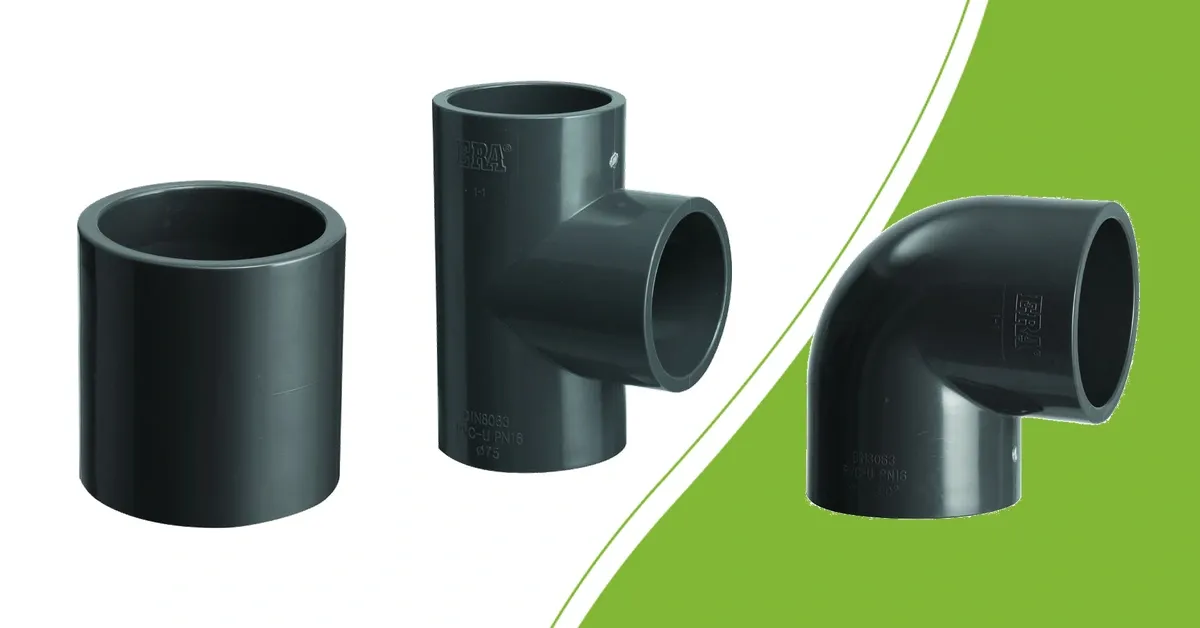
A 32 mm tee with a 1 inch female thread combines two interfaces. The 32 mm size belongs to the pipe connection; the female thread needs a matching threaded component. The same distinction applies to the threaded elbow.
Check male and female threads and the seal
A female thread sits inside an opening; a male thread sits around the outside of a connector. Also check where the joint seals. Some threaded joints need an appropriate thread sealant, while others seal with a ring or flat gasket. Do not automatically add tape to every screwed connection.
Check the material, thread type and assembly requirements of both parts. Do not force a combination that only engages for a few turns. Excessive force can damage a plastic fitting without solving the cause of a poor fit.
Write a connection list before ordering
For each joint, record material, pipe size, solvent or threaded connection, male or female thread and its function. Also note the operating pressure, temperature and liquid. All components need confirmed suitability for those conditions; the material name alone is insufficient.
Then choose sockets, elbows, branches and valves. A flexible PE line needs a suitable material transition. Read PVC solvent joints or thread sealing to match the assembly method to the connection you have selected.