


How to clean and refill a nutrient reservoir
A clean water supply involves the reservoir and its connected parts. Use a consistent emptying, cleaning and refilling routine to keep the system easy to inspect.
Plan cleaning around irrigation
Empty the nutrient reservoir before thorough cleaning. Schedule the work so plants still receive the irrigation they need. Safely switch off the pump and connected electrical equipment before removing parts. In a recirculating system, allow for water that returns after pumping stops.
Topping up and cleaning are separate jobs. Fresh water does not remove deposits on the wall, debris on the bottom or residue around the tap. Inspect the inside regularly and include a full clean between growing cycles or when the supply becomes dirty.
Clean the container and accessible components
Remove loose material and gently clean the walls, bottom and reachable corners. Use tools that will not damage the material. Rinse loosened dirt away rather than allowing the next batch of nutrient solution to carry it into the lines.
Choose only a cleaner suited to the material and application. Follow its dilution, contact time and rinsing instructions, and never mix cleaning products. Clean the removable pump filter, tap and accessible connections using a method appropriate to each component.
Inspect the setup before refilling
Check the wall, seams and connections for wear or damage. Confirm that closures fit and hoses connect without strain. Test with clean water first and look for leaks. A flow check can also reveal a connection that has been reassembled incorrectly.
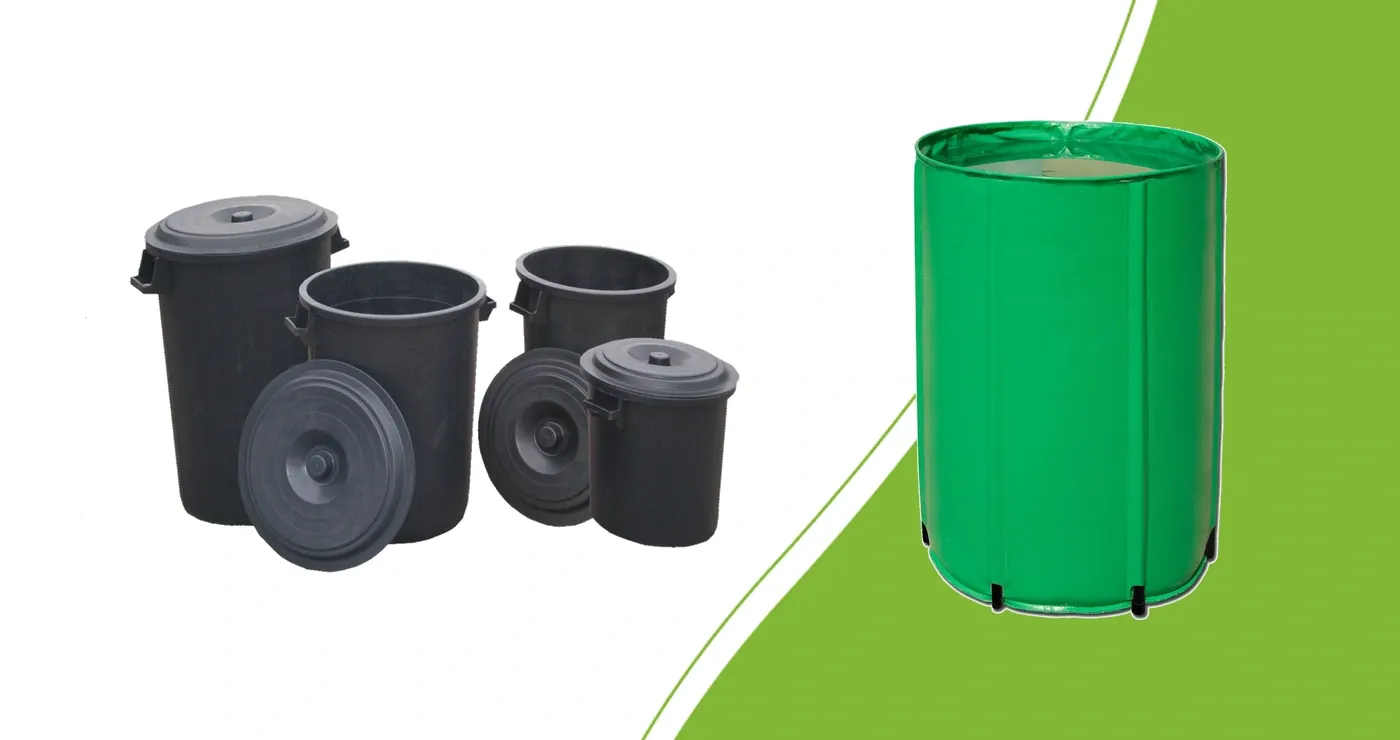
A closing top helps limit light and debris entering the reservoir. The 120-litre round barrel is offered with a lid, while the 100-litre collapsible Aquaking tank has a closing top. Keep the cover clear of the system's cables, hoses and operating requirements. Covering does not remove the need to clean.
Start with a known water volume
Measure the water you add. A per-litre dose is only useful when you know the actual mixing volume. Use the dosing and mixing sequence for your plant nutrients. Mix each addition fully and keep undiluted concentrates from coming directly into contact.
Then check the solution with maintained pH and EC meters. Allow thorough mixing and wait for a stable reading. EC describes overall conductivity; the same reading does not prove that individual nutrients remain in the same proportions. Adding water alone does not replace checking the solution.
Record the batch and monitor operation
Write down the fill date, volume and doses. During use, inspect the water level, pump operation and condition of the solution. There is no single storage period for every setup: source water, nutrients, temperature and system design differ.
If you want a larger tank to refill less often, calculate the usable capacity you need and consider how you will manage the whole batch. Our comparison of tank constructions covers access and storage. Browse water tanks for a suitable shape and size.