


Calibrating a pH meter and storing its electrode
Reliable pH readings start with a clean, suitable electrode and the correct reference solution. Calibration, checks and storage are three different tasks. Match them to your exact meter.
Check the exact model first
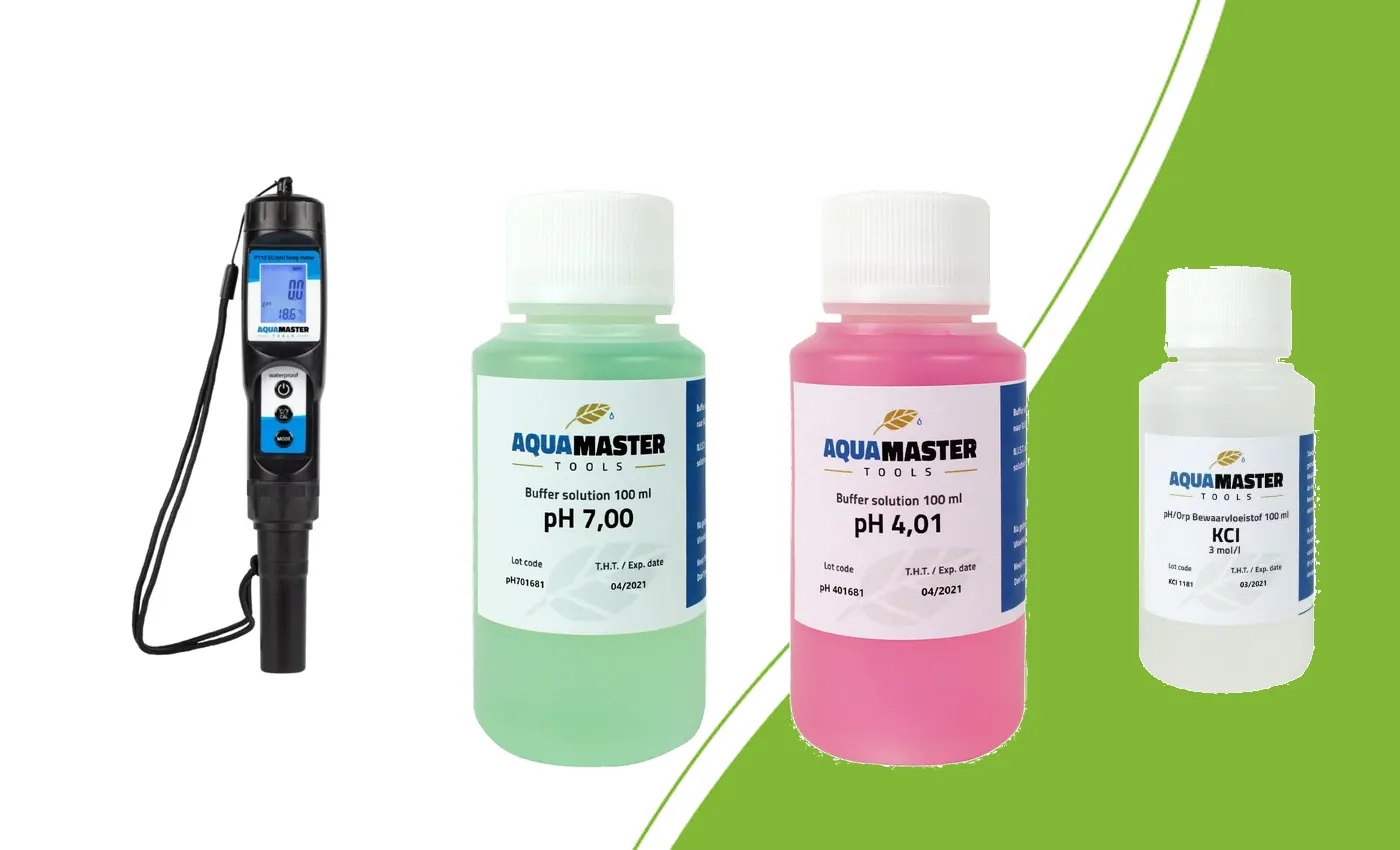
Record brand, model and electrode type. Use the calibration and care procedure for that version. Matching plugs or bottle colours do not prove compatibility. Check the model designation of a replacement electrode too; Aqua Master Tools P110 and P160 use separate electrodes.
Prepare clean equipment and suitable buffers
Use clean containers and fresh reference solution with the values required by your procedure. pH 4.01 and pH 7.00 or 7.01 are reference values, not general nutrient-solution targets. Check which buffers the meter recognises. Follow the required calibration order and allow the display to stabilise.
Rinse between solutions and prevent contamination
Clean and rinse the electrode as required for the model. Use a separate container for each buffer. Never return used liquid to the stock bottle. Do not rub fragile electrode glass. Avoid calibrating by dipping a dirty probe straight into several stock bottles.
Distinguish wet storage from dry storage
Bluelab pH probes need to remain hydrated in suitable KCl storage solution. Aqua Master Tools P110 Pro has a dry storage electrode, so do not automatically treat it the same way. Activation after storage also varies by model. Check the procedure before first use and after a longer break.
Check a reading before drawing conclusions
Check the display in a clean reference using your meter’s procedure. If values drift or do not stabilise, first check cleaning, activation, battery and calibration. Repeated calibration cannot repair a damaged or worn electrode.
Choose maintenance products by function
A pH buffer is a calibration reference; KCl storage solution supports storage of probes designed for it. EC reference solution is for conductivity checks or calibration. These liquids are not interchangeable. Keep bottles clean and closed, and plan care around usage and your model’s procedure.
Choose your next step
Measuring & calibration for your grow room · pH meters · Calibration solutions · Bluelab meters · Aqua Master Tools meters
Which meters do you need for water, substrate and air? · EC, mS/cm, µS/cm and ppm: compare readings correctly