


Drip irrigation: calculate and check water volume
Convert litres per hour into an initial run time, then measure actual outlet flow with collection cups. Check capillary tubing and multi-outlet distributors without guessing the dose.
Start with flow, not a fixed timer setting
A litres-per-hour rating describes flow under particular conditions. It does not tell you how much water your plant needs. Decide on an intended volume per pot, then measure the actual flow of the assembled system. Use clean water and collect each outlet separately over an equal period.
Convert litres per hour to minutes
Use minutes = required litres ÷ flow in l/h × 60. If an outlet actually delivers 4 l/h, collecting 0.5 litre takes 7.5 minutes. At a measured 8 l/h, it takes 3.75 minutes. These are calculation examples, not watering recommendations for a particular plant.
Collecting 200 ml in three minutes gives a flow of 0.2 ÷ 3 × 60 = 4 l/h. Convert millilitres to litres first. Record duration, volume and settings so you can compare the next measurement fairly.
Check the valve and four outlets separately
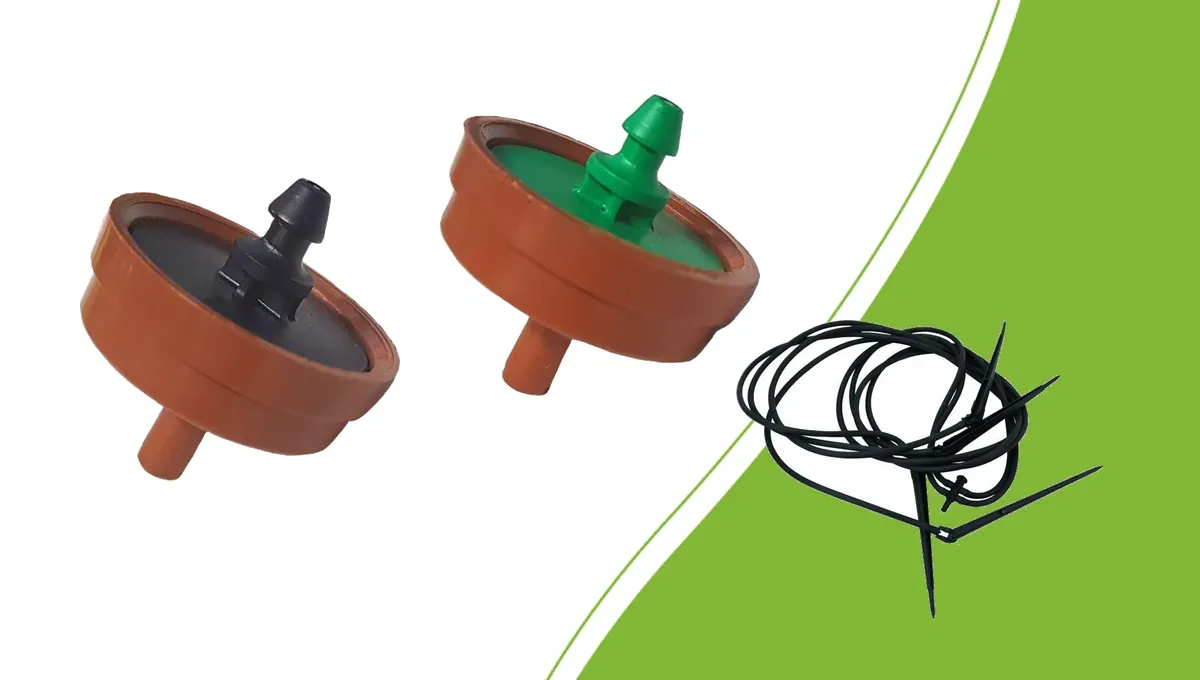
The four-way CNL distributor in our range divides water between four tubes and is supplied without a pressure valve. The 4 or 8 l/h rating belongs to the selected CNL valve. Do not multiply that rating by four as though every tube receives the full valve flow. Collect the outlets separately and add their measured volumes to establish the total dose.
Compare the outlets with each other. A clear difference calls for checking kinks, dirt, connections and available pressure first. Extending the run time alone may overwater the other pots.
Capillary length changes the measuring conditions
The flow of capillary tubing depends on length and pressure. A nominal 2 l/h rating for a 120 cm capillary does not establish a fixed flow in every setup. Approximately 1.85 l/h at 1 metre and 0.5 atmosphere applies to those specific measuring conditions. Do not treat that figure as a guaranteed flow for your 120 cm tube or cut tubing at random to increase the dose.
Measure again after final assembly. Use the same tube lengths and placement as in the finished setup.
Check pressure, filtration and the final outlet
The CNL valves described here open at 1.2 bar. That identifies opening pressure; it does not establish that every high-capacity pump is suitable. Check available pressure with all intended outlets operating. These valves and the four-way distributor specify a filter rating of 100 µm or 0.1 mm.
Include an outlet at the end of the supply line in your checks. A dirty filter or kinked tube can change measured flow. Flush and inspect the system before changing the timer.
Adjust for the pot and substrate
After a trial watering, check how moisture spreads through the substrate and how much drainage occurs. The appropriate volume depends on the plant, pot, substrate and conditions. Change one setting at a time and record the result. Recheck after changing tubing, distributors, the pump or filtration.