


How to clean a sprayer: tank, hose and nozzle
A clean tank is only the start. Include the hose and spray head, release pressure or disconnect power, and check the spray pattern before your next session.
Start with the liquid you used
Water, foliar feed and other liquids can need different cleaning methods. Before you start, check the instructions for both the liquid and your unit. Do not choose a cleaner simply because it is available. An unsuitable combination can damage seals or other components. Never mix different leftover liquids.
Clean after use so residue does not dry inside the tank, hose or head. Prepare only the quantity needed for the task. That reduces what you have left to collect and clean afterwards.
Prepare the unit before opening it
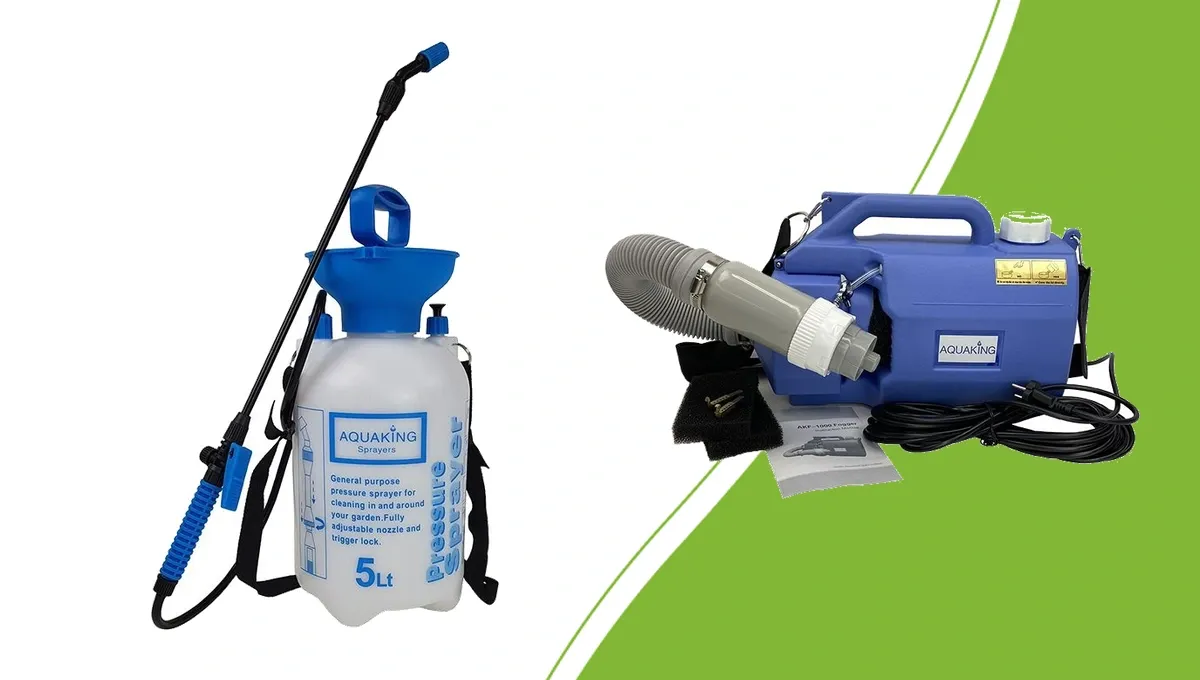
Release the pressure in a pressure sprayer as instructed before opening the tank or loosening a connection. Switch an electric mister off and unplug it. Keep electrical parts dry. The Aquaking 5 litre pressure sprayer has a pressure relief valve; follow its operating instructions to release pressure.
Collect leftover liquid and follow the disposal instructions for the product used. Do not combine residues with other products or pour them down a drain without checking those instructions.
Clean the whole liquid path
Clean the tank and filling opening using a method suited to the unit and liquid. Close the tank as instructed. Where rinsing is permitted, pass the suitable rinse liquid through the liquid path too, collecting the output. Rinsing just the tank leaves residue in the hose and head.
On the Aquaking Fogger, include the flexible hose in your checks. On the ECO 4 litre, check the nozzle. Never immerse the motor or electrical housing, and do not run an electric unit dry to empty it.
Handle a blocked nozzle carefully
Switch off and release pressure or disconnect power before checking the head. Remove only the parts identified for this purpose in the instructions and use an approved cleaning method. Do not enlarge an opening with a needle or drill bit: changing its shape can change the spray pattern.
If the pattern remains uneven, check for a kinked hose, residue elsewhere in the liquid path, damaged seals or an incorrectly fitted head. Increasing the setting does not resolve the cause of a blockage.
Check before the next session
Reassemble the parts, check that connections are secure and lay the hose without kinks. Test with clean water in a suitable place. Look for leaks, an even pattern and normal control operation. On the Aquaking pressure sprayer, also check the adjustable head and spray-lock. Stop if you find leakage or unusual behaviour and resolve the cause before use.
Let components dry where instructed and protect the unit from freezing if required for your model. Do not store unidentified liquid for the next session. If you need a different design, compare our pressure sprayers and plant misters by capacity and controls.